Chlorine

Pool Chemicals at Incredible Prices.

Please call us on 0208 941 6618 or email us for more information, technical advice, or a competitive quote.

Chlorine is the most widely used chemical for pool sanitisation. It is inexpensive, easy to use, and many people like its clean, fresh smell. Chlorine breaks down into Hypochlorous acid and Hypochlorite ions which oxidise bacteria until they are neutralised and can no longer reproduce. For domestic use, chlorine is supplied in liquid form, or as granules or tablets, and is available in ‘Stabilised’ or ‘Unstabilised’ formulas.

Stabilised & Unstabilised Chlorine Formulas

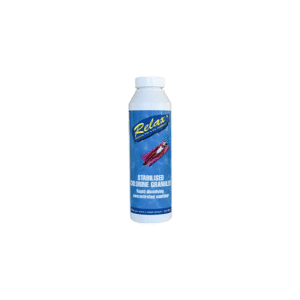
Stabilised Formula  If cyanuric acid is part of the formula then the chorine is said to be ‘stabilised’ – this means that it lasts longer because it is attacked less by UV light. Using some stabiliser is therefore valuable, but problems arise if it becomes too concentrated and a condition called ‘Chlorine Lock’ occurs. In this situation, the chlorine remains in a combined form so is not available to kill micro-organisms. To stop this, excess stabiliser must be diluted out, since it does not get used up like chlorine.

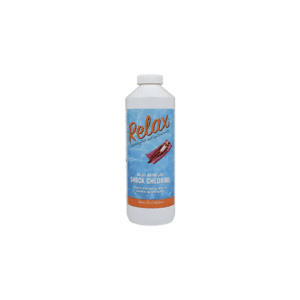
Unstabilised Formula (‘Shock Chlorine’) Chlorine without cyanuric acid is ‘unstabilised’ and is referred to as ‘Shock Chlorine’. When shock chlorine is added to a pool, it works rapidly killing bacteria and algae and is used up quickly.

The best solution when sanitising a pool with chlorine is to use a combination of ‘stabilised’ and ‘unstabilised’ chlorine. A low concentration of ‘stabilised’ chlorine of 1-2 ppm should be maintained and periodically, say once a week, the pool should be shock dosed with ‘unstabilised’ chlorine up to 5ppm. This will kill any microorganisms that are resistant to low levels of chlorine. Ideally, this should be done at night so by the next day the chlorine level has fallen.

Showing all 2 results

Pool water with ripples in turquoise color reflecting sunlight, providing a cooling and refreshing experience.

Chemical Concentration

The concentration of chlorine required in domestic pools is lower than that required in public pools. You should always use the correct quantities for your pool size. Test the chlorine concentration of your pool using DPD No1 in a test kit – available on request. To work out the water capacity of your pool (in gallons), you can use the following formulas:

Imperial (gallons):

For square or rectangular pools – length (ft) x width (ft) x average depth (ft) x 6.25 = volume (gallons)
For circular pools – 3.1428 x radius2 (ft) x average depth (ft) x 6.25 = volume (gallons)

Metric (m3):

For square or rectangular pools – length (m) x width (m) x average depth (m) = volume (m3)
For circular pools – 3.1428 x radius2 (m) x average depth (m) = volume (m3)

Pool pH

All chlorine-treated pools should have a pH between 7.2 and 7.6. A low pH is acidic and corrosive, and will damage pool parts and sting bather’s eyes. A high pH is alkaline and stops any chlorine present working as well as being scale forming.

Test the pH of your pool using Phenol Red in a test kit – available on request. If your pool pH is not within the required limits (either too high or too low), you can add a pH minus or a pH plus to bring levels within the required limits.

pH minus – A pH above 7.6 (‘high’) is lowered by adding pH minus (sodium bisulphate or pool acid)
pH plus – A pH below 7.2 (‘low’) is raised by adding pH plus (sodium carbonate or pool alkali)

If you are interested in finding out more about the range of pools we offer, why not call us today on 0208 941 6618?

Our team would be delighted to help you with any questions or queries you might have, and we will endeavour to get back to you as soon as we can.