

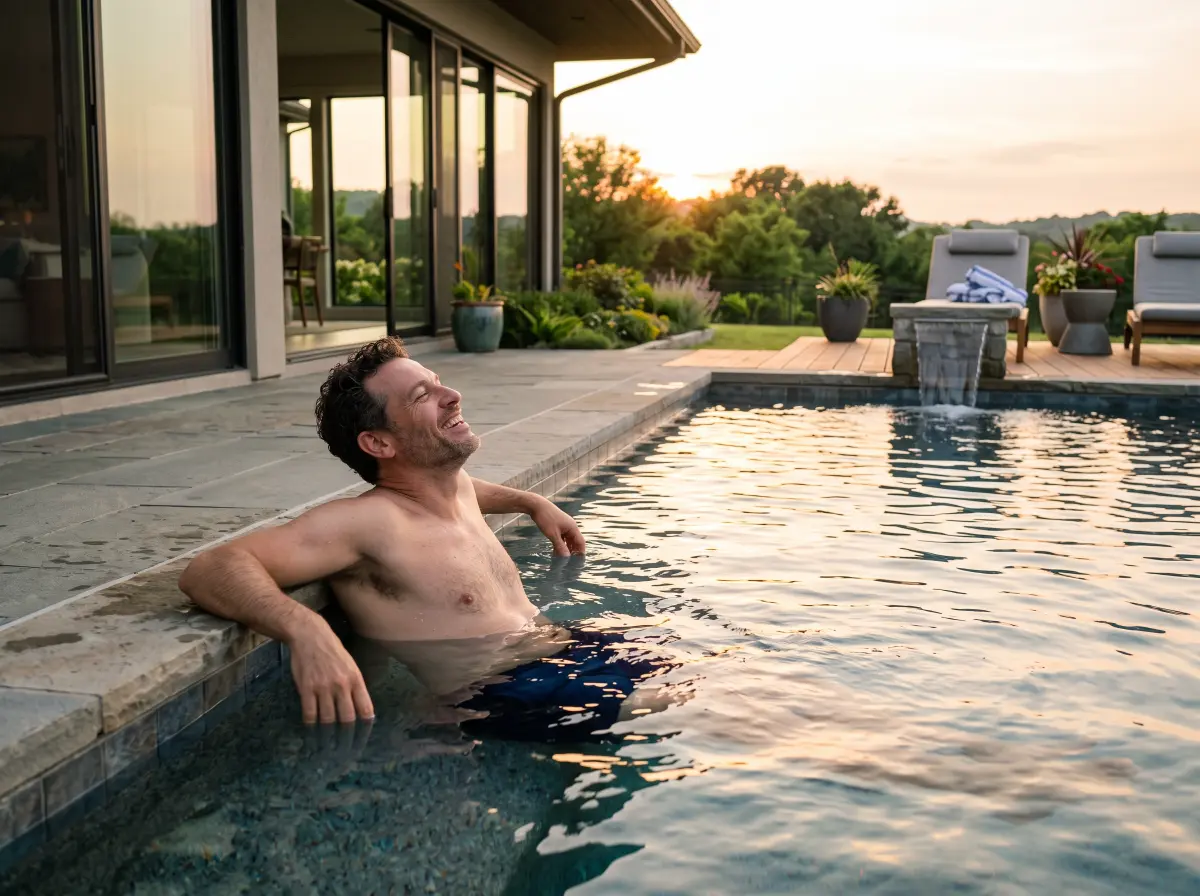
Whether you are lounging on a holiday abroad or training at your local leisure centre, it is incredibly easy to lose track of time in the water. But while swimming is an excellent low-impact workout and a great way to cool down, our bodies simply aren’t designed to stay submerged indefinitely.
So, how many hours can you actually stay in a swimming pool before it goes from relaxing to risky?
The short answer for most healthy adults is about 1 to 2 hours per session. However, the exact limit depends heavily on water temperature, pool chemistry, and who is doing the swimming.
Here is a detailed breakdown of what happens to your body when you stay in the pool too long, and how to spot the signs that it’s time to dry off.
The 45-Minute Window: Skin Hydration and Chemistry
We have all experienced pruney fingers and toes after a long dip. For a long time, people thought this was just skin absorbing water. In reality, it is an evolutionary nervous system response; your blood vessels constrict to give you a better grip in wet environments.
However, wrinkly skin is also a sign that your skin’s natural barrier is altering.
- The Role of Chlorine: Chlorine and other pool chemicals are essential for killing harmful bacteria. But they also strip away the natural oils (sebum) that keep your skin hydrated and protected.
- The Risk: After about 45 to 60 minutes, the skin barrier begins to weaken. Prolonged exposure can lead to irritant dermatitis, leaving your skin itchy, red, and excessively dry.
Core Body Temperature
Your body temperature drops much faster in water than in air. Even a pool that feels warm initially can slowly drain your body heat over time.
Standard Swimming Pools
This is the standard temperature range for competitive and recreational pools. It feels refreshing because it is lower than your core body temperature.
- Safe Duration: Healthy adults can comfortably swim for 1 to 3 hours here, provided they are moving. If you are completely still, you will start shivering much sooner.
Heated Pools and Hot Tubs
Heated hydrotherapy pools or hot tubs reverse the risk. Instead of cooling you down, they can cause overheating (hyperthermia).
- Safe Duration: You should strictly limit your time in a hot tub or heavily heated pool to 15 to 30 minutes. Staying in longer can cause dizziness, a drop in blood pressure, and heat exhaustion.
Dehydration
It sounds counterintuitive, but you can easily become dehydrated whilst surrounded by water.
When you swim, you are still sweating; you just don’t notice it because it washes away instantly. Furthermore, immersion in water increases blood pressure in your core, which signals your kidneys to produce more urine (a phenomenon known as immersion diuresis).
The Rule of Thumb: If you are swimming laps or playing actively, you should take a break every 60 minutes to drink fresh water, even if you don’t feel thirsty.
Lifespan Limits: Children vs. Adults
Age plays a massive factor in how long a pool session should last.
- Toddlers and Babies (Under 3 years): Their ability to regulate their own body temperature is not fully developed. They should rarely stay in a standard pool for more than 30 minutes. If they start shivering or their lips turn blue, take them out immediately.
- Children (4 to 12 years): Kids often ignore the signs of being cold or tired because they are having too much fun. A safe limit is 60 to 90 minutes, followed by a solid break to warm up and hydrate.
- Adults: 2 to 3 hours is generally the absolute maximum for a continuous recreational swim in standard water, assuming regular hydration breaks.
Signs It’s Time to Get Out
To keep your pool days safe and enjoyable, listen to your body. You should exit the water immediately if you experience any of the following:
- Shivering or chattering teeth
- Extreme wrinkling of the skin on hands and feet accompanied by itchiness
- Feeling dizzy, lightheaded, or unusually fatigued
- Muscle cramps
- Red, stinging eyes (a sign of chloramine buildup in the water)
By capping your sessions at a sensible 1 to 2 hours and taking quick breaks to rinse off and hydrate, you can enjoy the water all summer long without any nasty side effects.
Contact Us for Swimming Pools and Pool Accessories
Contact AG Budget today to speak with one of our Pool Maintenance specialists and ask any questions you may have. Call us on 0208 941 6618 or contact us.
