




What are the benefits of salt chlorination as a pool water treatment method?
The advantages of salt chlorination are:
- Simplified water treatment: the sanitization process uses a salt chlorinator and is therefore automated. Maintenance becomes less of a burden, because it is not necessary to add salt as frequently as disinfecting tablets.
- Softer on the skin: salt chlorination does not pose any risk of irritation or allergy.
- Safer: the danger associated with storing chemicals is entirely eliminated because salt is a natural substance.
- Better for the environment: salt is not a pollutant, and when filters are backwashed no chemicals are released into the wastewater system!
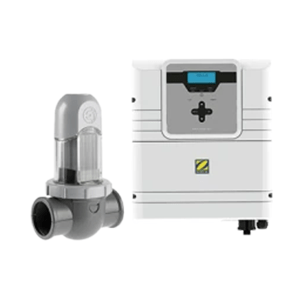
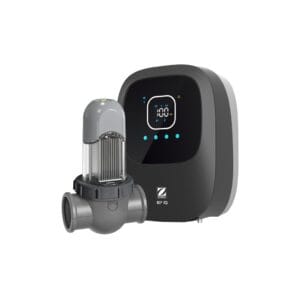
Salt chlorinators typically use a set of electrodes and a control panel. The electrodes are usually small metal plates that are electrically charged. The charged plates essentially strip the chlorine atom out of the salt to make it in to the type of chlorine that can kill bacteria and algae. Once the bacteria have been killed the chlorine is released back to the water and the elecrodes re-form it again and again giving you a constant supply of chlorine. The set of elecrodes is called the “cell” which should be installed on the return flow to the pool. This can be done during the construction phase of the pool but the salt water cell can be retro-fitted. The cell is connected to a conrol panel that is usually fixed to the wall in the pool room. How much chlorine the cell produces is set by the control panel which will also tell you if your salt concentration in the pool water is correct.
The typical salt concentration for most chlorinators to work is 4 grams of salt for every litre of water or 4,000 parts per million (ppm). For a standard 12 x 24 pool with 30m3 of water that is 120kg. Salt usually comes in 25kg bags so that would be 5 bags.
