

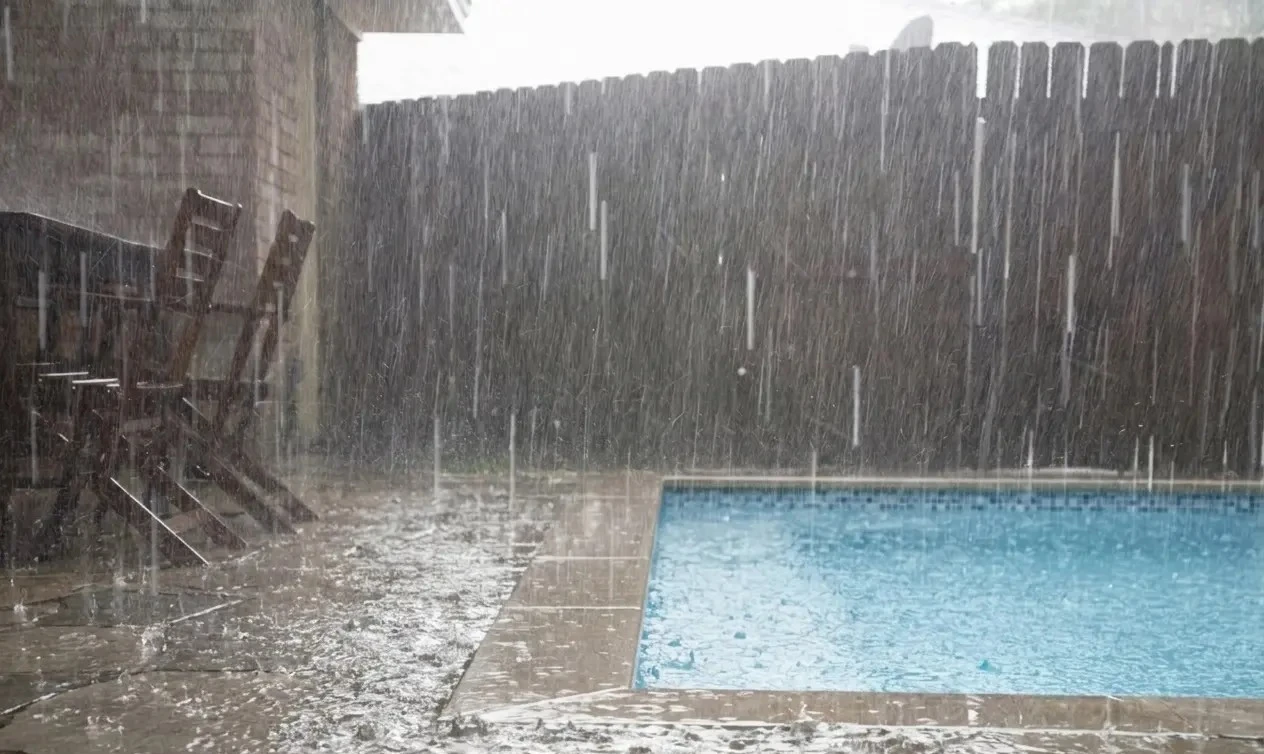
Ah, the Great British Summer. One minute you’re applying SPF 30 and reaching for cool drinks; the next, you’re dashing out to rescue patio cushions from an abrupt downpour. While we’re used to liquid sunshine, many pool owners don’t realise heavy showers do more than just top up water levels.
Shifting pH levels to introducing unwanted guests like algae and rain can play havoc with your pool’s sensitive ecosystem. Here is everything you need to know about managing your pool when the heavens open.
The Anatomy of a Downpour: Why Rain Isn’t Just Free Water
It’s a common misconception that rain is pure. As it passes through our atmosphere, it picks up various bits and bobs that your filtration system must then deal with.
Dilution Dilemma
Heavy British thunderstorms can rapidly drop an inch or two of water, diluting your carefully balanced chemicals. Sanitiser levels decline, making water more vulnerable to bacterial growth.
Atmospheric Pollution & Acid Rain
Rainwater is naturally slightly acidic because it absorbs carbon dioxide as it falls. In industrial or urban areas of the UK, it can also emit nitrogen and sulphur oxides. When this water enters your pool, it can cause your pH and Total Alkalinity to plummet, resulting in stinging eyes and, over time, corroded heat exchangers or ladders.
The Garden Runoff Effect
Many UK pools are bordered by dense gardens or stone coping. Heavy rain not only enters the pool directly but also carries runoff from the surrounding land. This runoff includes:
- Organic Matter: Grass clippings, soil, and sodden leaves enter the pool.
- Fertilisers: If you’ve recently applied fertiliser to your lawn, rain can transport nitrates and phosphates into the pool, effectively feeding algae.
- Algae Spores: Wind and rain are the primary means of transport for algae spores seeking a new home.
Temperature Drops
Unlike the Mediterranean, a cold snap often follows a British rainstorm. A quick influx of cold rainwater can drop your pool temperature considerably, forcing your heat pump or boiler to work overtime, which can be a bit of a sting when the utility bills arrive.
Your Post-Storm Checklist
Once the clouds clear and the birds sing, it’s time for damage control. Follow these steps for a crisp Monday swim.
Clear the Debris
Don’t rely just on the mechanical cleaner. Use a leaf skimmer net to quickly remove large organic matter. Check the skimmer and pump strainer baskets; clogged baskets reduce circulation, making recovery harder.
Test the Water (The Non-Negotiable Step)
Use your testing kit or strips. Your levels have likely shifted. Prioritise them as follows:
- pH & Alkalinity: Do these first. If pH is off, chlorine won’t work well.
- If chlorine drops below 1.0 ppm, add more immediately.
Shock the System
After a particularly heavy or dirty storm, a dose of Oxidising Shock (non-chlorine or calcium hypochlorite) will help remove any organic contaminants brought in by the rain. This resets the water and prevents unwanted colour changes for up to 48 hours.
Manage the Water Level
If the rain is particularly heavy, the water level may be above the halfway point of the skimmer mouth. If it rises too high, the skimmer cannot remove surface debris properly. Use the waste or backwash setting on your multiport valve to lower the level to the correct height.
Run the Filter
Run the pump for at least 24 hours after a storm to mix chemicals and filter fine silt.
Contact Us for Swimming Pools and Pool Accessories
Contact AG Budget today to speak with one of our Pool Maintenance specialists and ask any questions you may have. Call us on 0208 941 6618 or contact us.
